What Physical Therapists Want Caregivers to Know
Companion Article: Episode 08 of The Rare Remix Podcast
In Episode 08 of The Rare Remix Podcast, we spoke with three pediatric physical therapists. We discussed a variety of topics including how to lift and transfer loved ones safely, when to obtain equipment, and what physical therapists want parent caregivers to know.
If you can’t listen to the full episode, or just want to revisit the information, here’s a quick summary.
Caregivers: Your Body is Part of the Care Plan, Too.
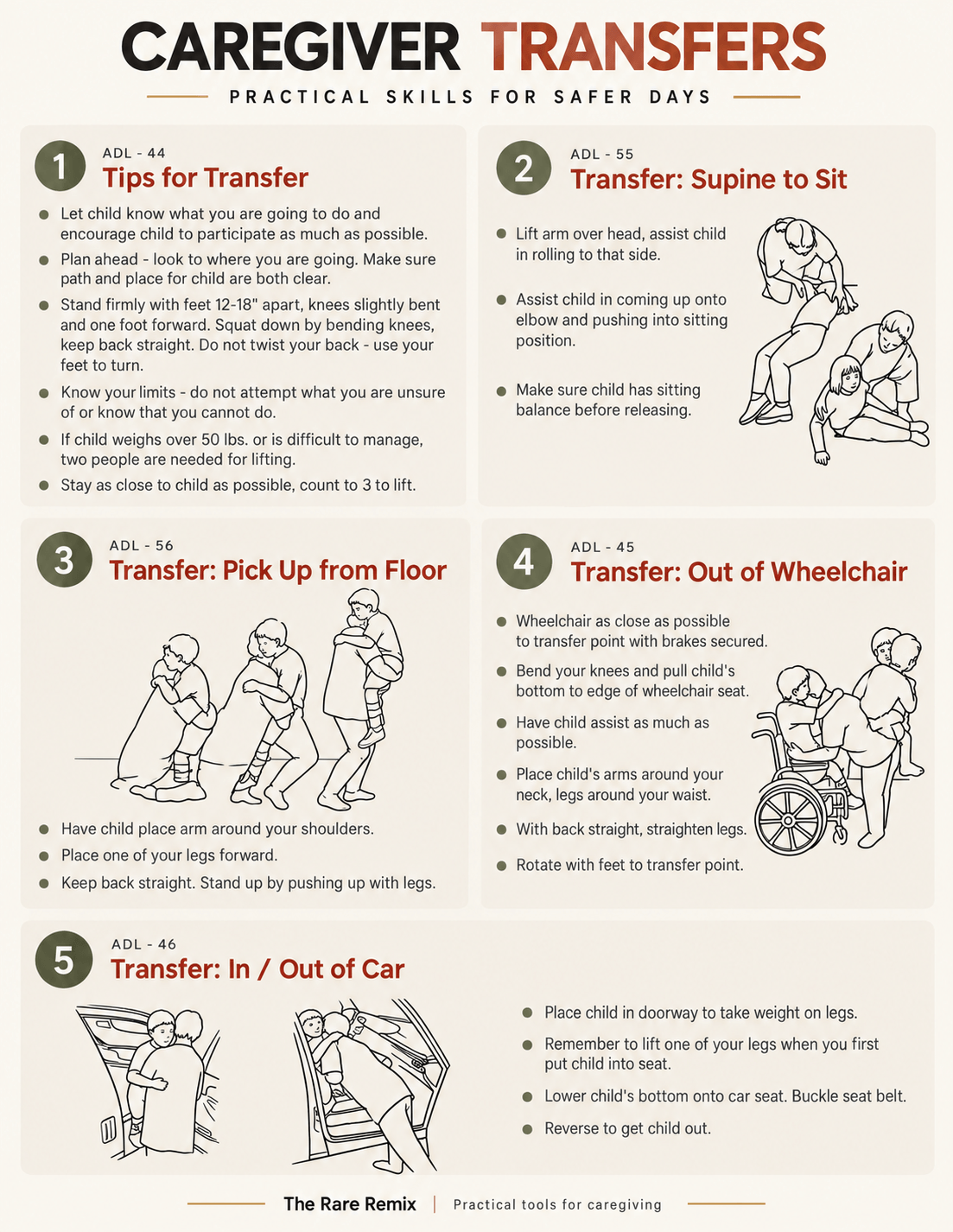
Caregivers often perform an extraordinary number of lifts and transitions on a daily basis: getting in and out of bed, moving to the bathroom, transferring to a wheelchair, getting into the car, and settling for sleep. It adds up quickly.
The therapists encouraged caregivers to take their own bodies seriously. Whenever possible, let your child do as much of the movement as they can. That builds their strength and takes some of the load off you.
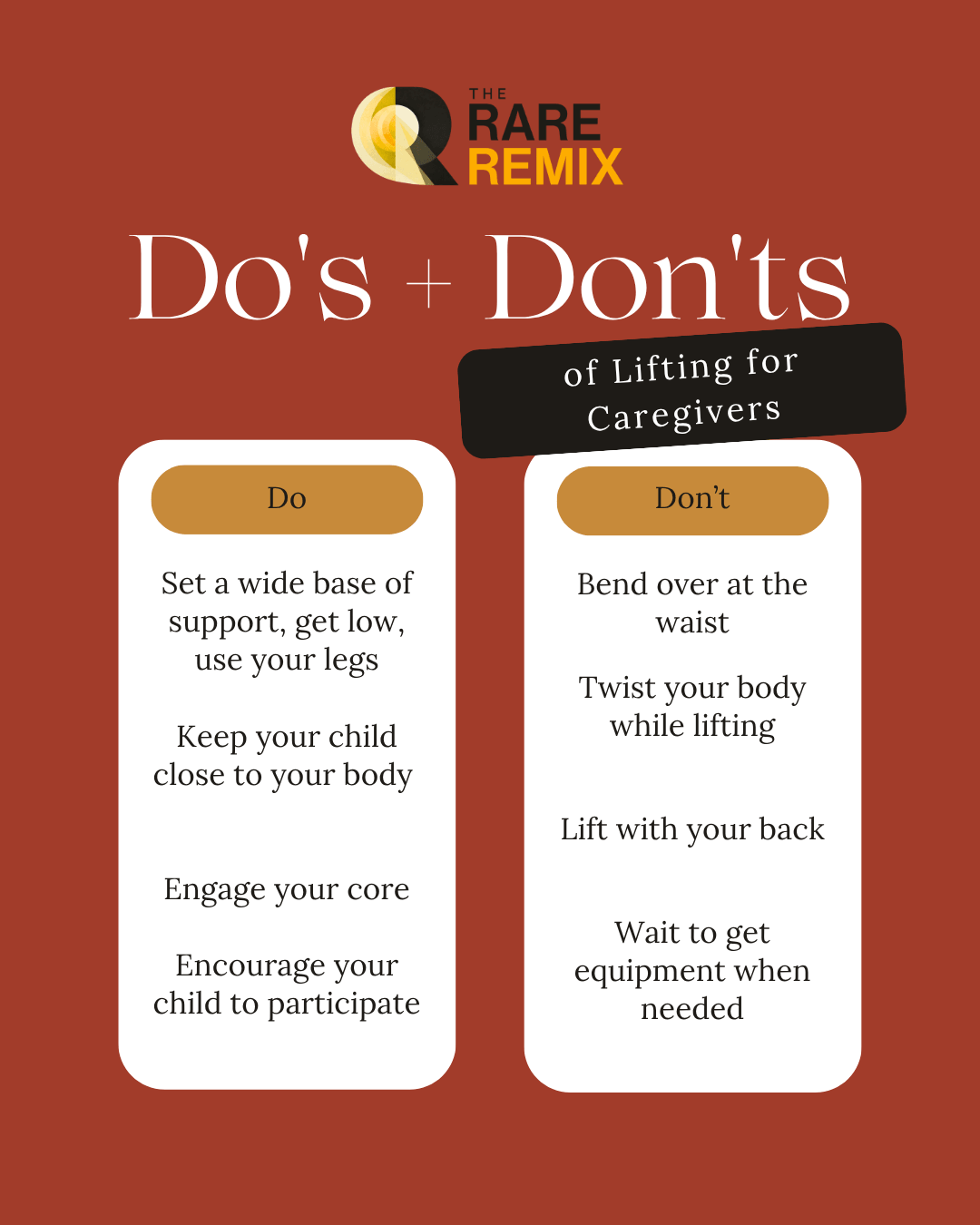
During a transfer, keep your child close to your body, use your legs instead of your back, engage your core, and avoid holding them at arm's length. Small changes in technique can make a meaningful difference over years of caregiving.
If you already have pain, or if a transfer feels like it is becoming a strain, bring it up at therapy. You do not need to wait for an injury to ask for a safer way to do it.
Equipment
Families can understandably hesitate before adding a standing device, walker, toileting chair, or other equipment. It can feel like giving up on a skill or accepting a limitation.
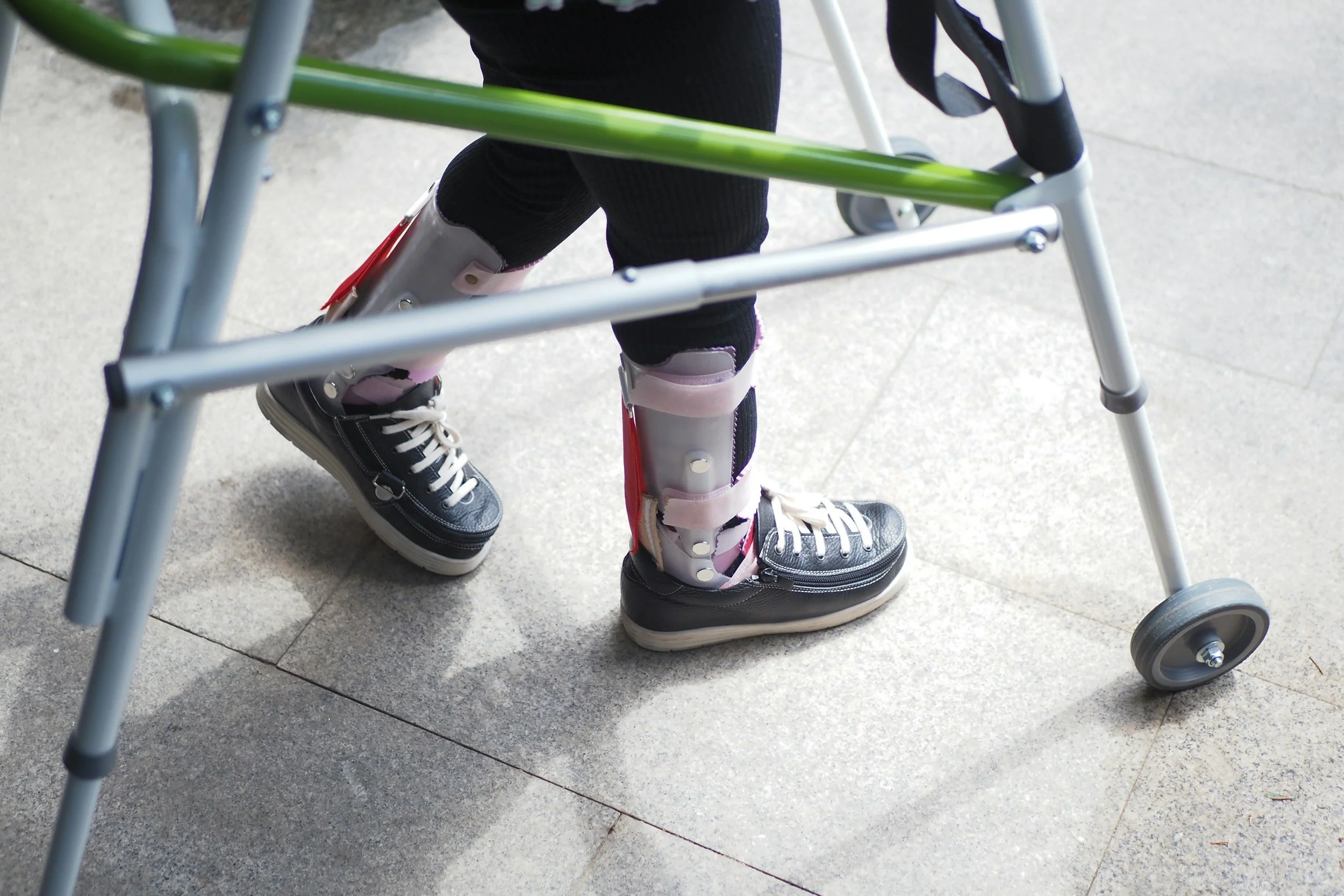
The PTs offered a different frame: equipment can be a bridge. It can protect a caregiver, create more opportunities for participation, and give a child a safe way to practice a skill.

The best time to start the conversation is usually earlier than you think. Equipment may take months to assess, approve, order, and learn to use. If your child is growing, needs more support for transfers, or may benefit from standing or mobility support, ask your therapist what should be in the pipeline. Practicing with a device before it becomes an emergency makes the transition far less stressful.
Bring Real Life into Therapy
If you haven’t already, start a discussion with your child's PT about what you are struggling with at home. This may have nothing to do with a traditional milestone. It may be getting off the floor, safely handling bath time, supporting standing during play, or finding a way to preserve a caregiver's back.
Those are valid therapy goals. A good pediatric therapist is not only treating the child in front of them. They are thinking about the whole family system that makes the child's day possible.
“I think that's what makes pediatrics a very special space to work in, is that we truly do work with the whole family. And that can make it more challenging and make us have to think more about how to work with that whole dynamic. But it really does make it much more rewarding when we can be like, “Hey…we're gonna save your back because you're part of the team taking care of this child.” -Emily, Episode 08
Noticing the Small Wins
Throughout our discussion, the PTs returned to one theme again and again: celebrate the small wins. A few extra seconds of standing, a calmer transition, a new way to participate, or an easier transfer may look small from the outside. But for a child and family who have worked toward it for weeks or months, it can be enormous.
Caregiving asks a lot of families. You do not have to carry all of it alone, and you do not have to wait for a major issue to ask for support. Let therapy be a place where your child's goals and your family's daily reality are both part of the care plan.
RESOURCES & LINKS
Do you have another topic you want us to cover?
Email us: admin@therareremix.com
RELATED ARTICLES