How to Adapt a Halloween Costume for a Wheelchair User
Expert Tips from the Solution-Makers at May We Help
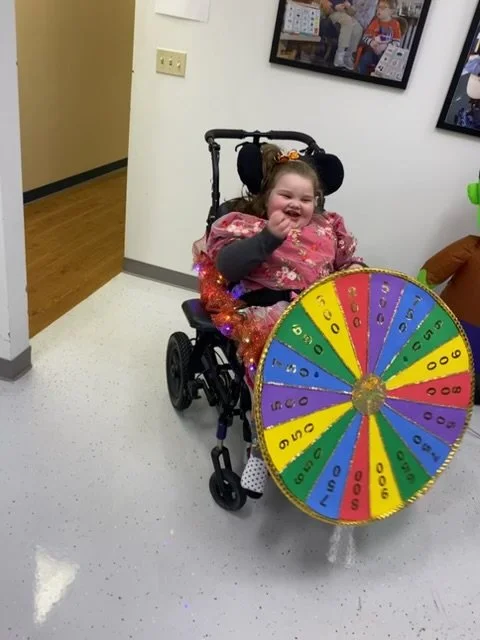
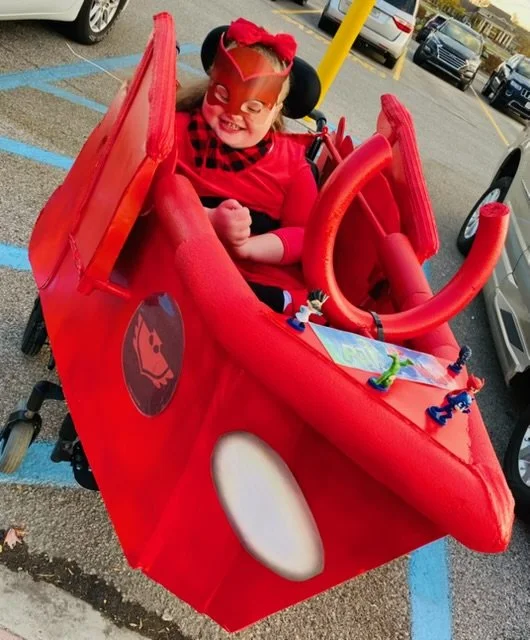
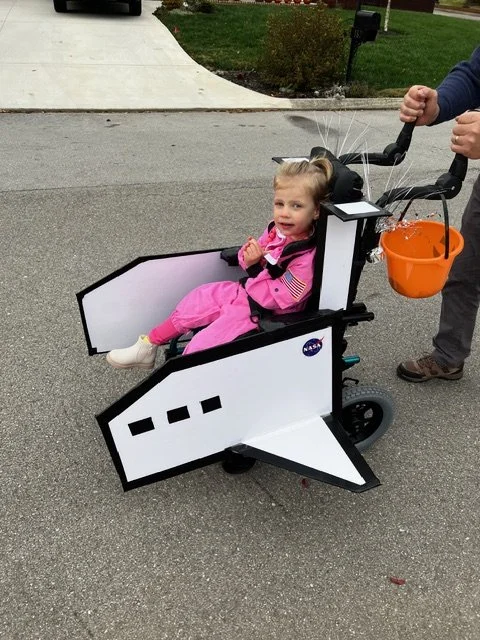
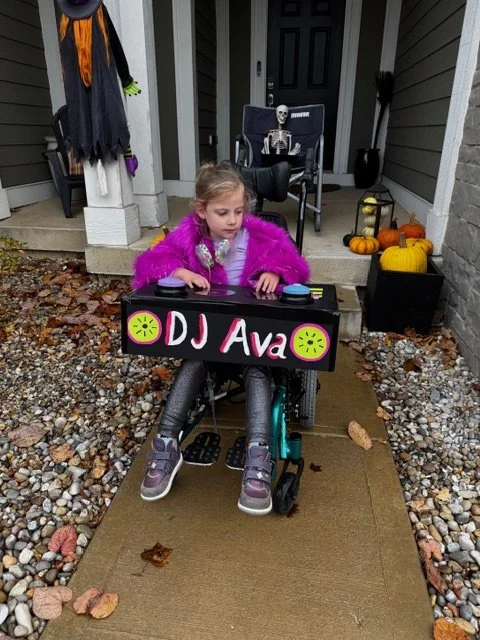
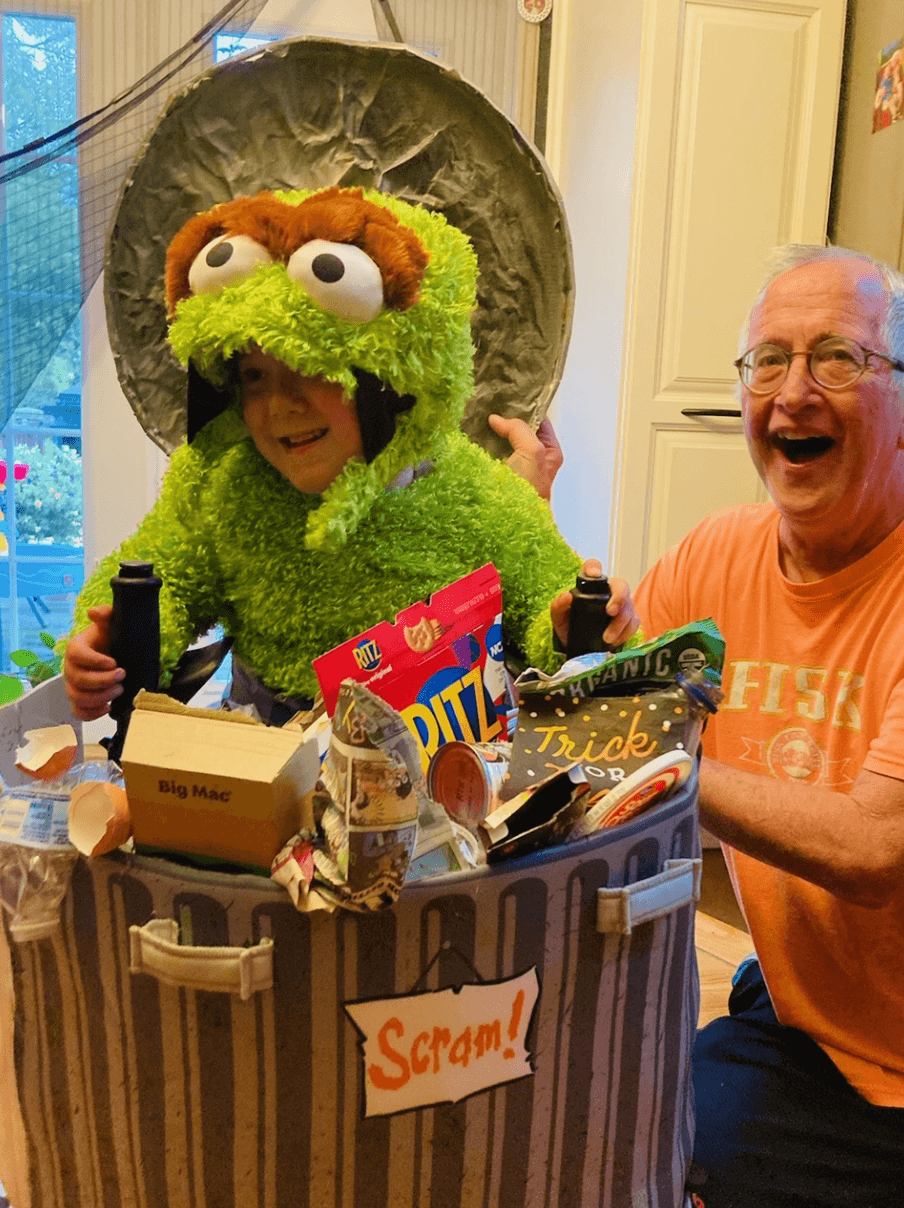
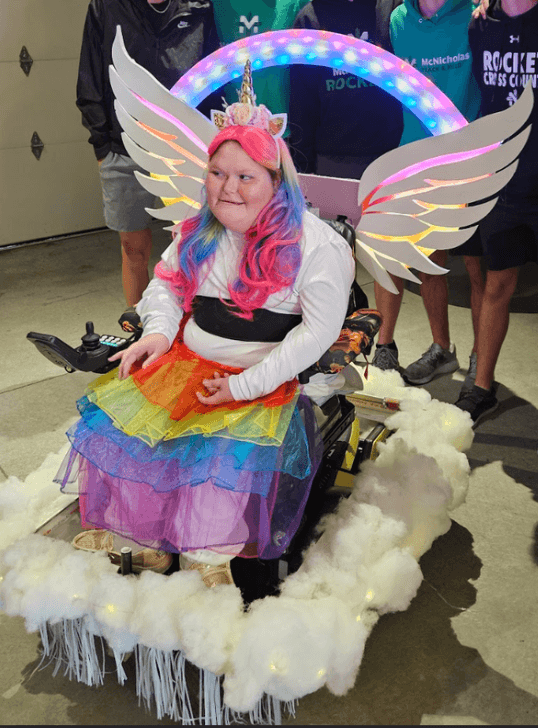

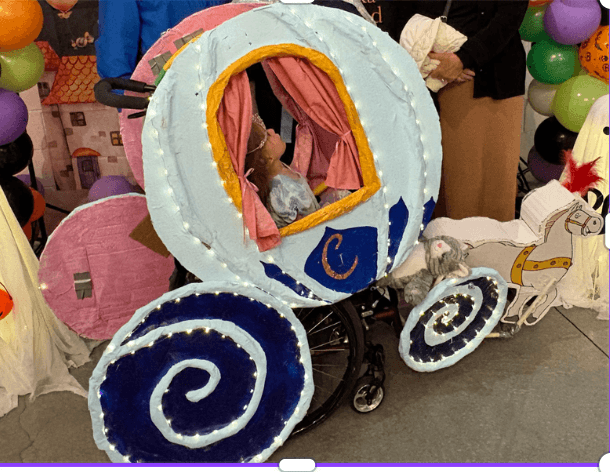
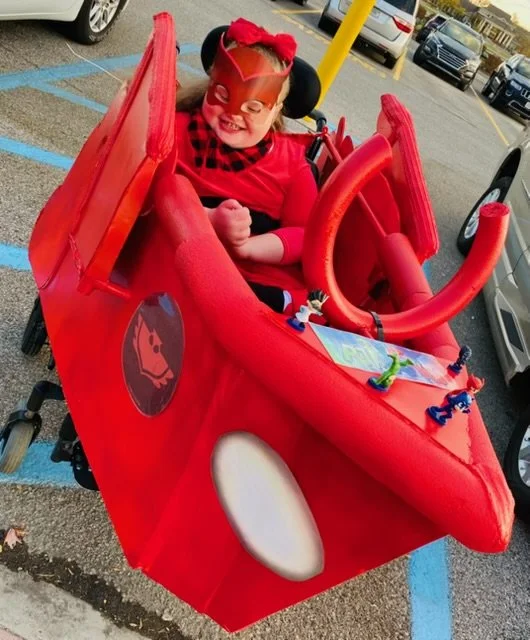
For children with disabilities, Halloween is an opportunity to dress up, trick-or-treat, and be included just like every other kid. But finding costumes that work with a wheelchair can be a real challenge for families.
May We Help, an organization based in Cincinnati, Ohio, creates customized solutions for everyday problems. Before each Spooky Season, they also design one-of-a-kind, adapted costumes for wheelchair users.
We spoke with May We Help about costume design strategy, materials, and where to look for ideas for your own Halloween creation. Readers will want to scroll the ENTIRE article to see these incredible costumes!
Process
Building a costume designed around a wheelchair will be a creative process of trial and error. Don’t worry if something doesn’t go as planned (we’re used to that, right?). We’re here to get you started.
Measure and Plan
Decide how you’re going to attach the design to the mobility aid — the wheelchair, gait trainer, wagon, etc.
1. Where are the connection points?
2. Will the device be operable with the costume? Will the wheels turn? Can you use the wheelchair breaks? Where are the push points for caregivers?
The goal is for the material for be lightweight and operable, but also look very polished.
Design
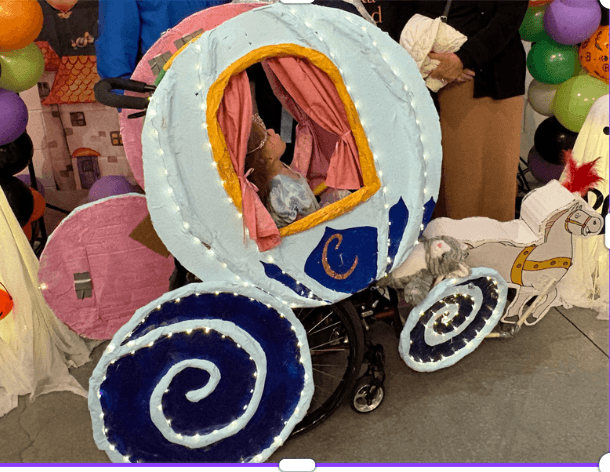
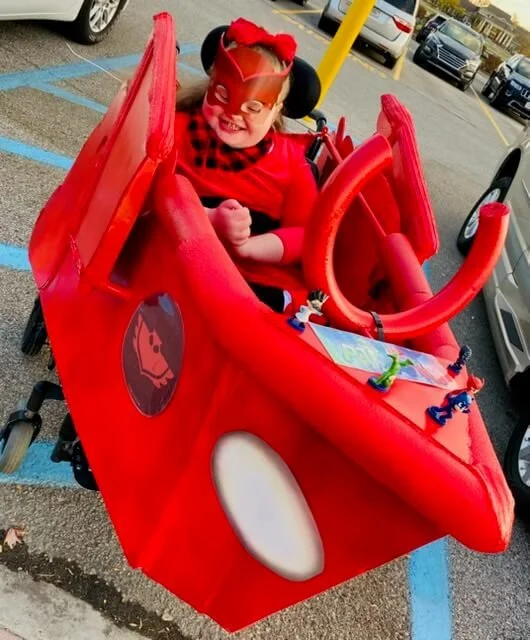
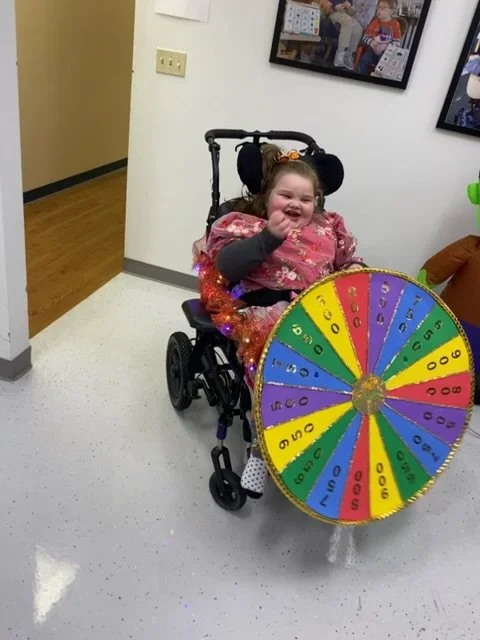
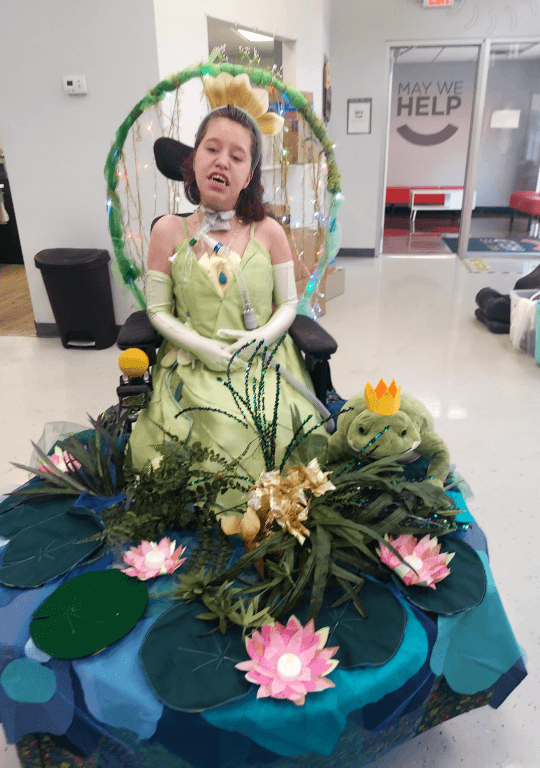
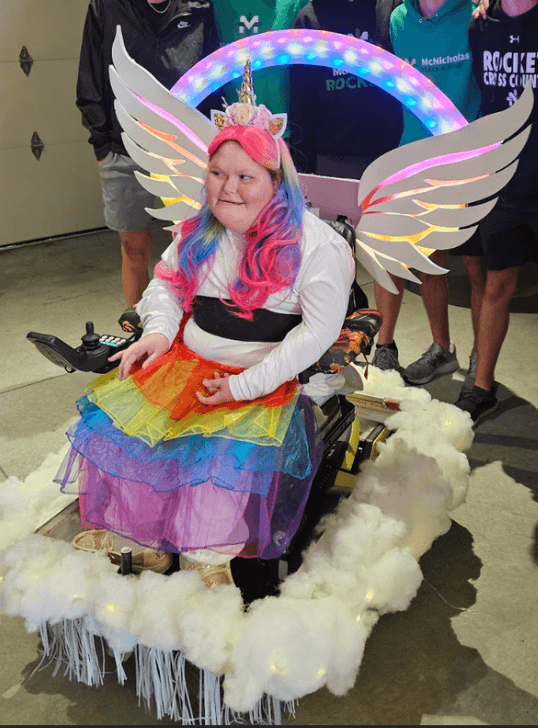
May We Help often starts their design by constructing a wheelchair tray made with Foam Core that attaches to chair. This creates a sturdy but lightweight base for the costume.
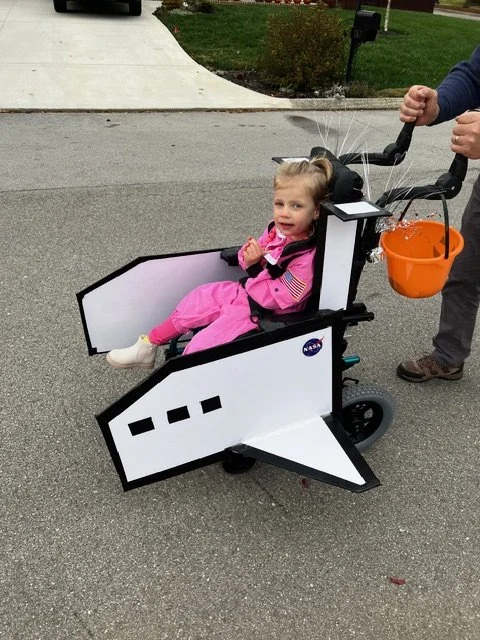
Foam insulation board works well to build a vehicle. Use an electric knife (like you might use to cut a turkey) to score the foam and make cuts.
When brainstorming your design, think outside the box. The costume can extend below the person’s seat. The volunteers at May We Help began by working with play set designers. Think about what might be “on stage” to add another layer of complexity to your design.

Potential Materials
Zip ties
Velcro strips
PVC pipe for the frame
Plastic
Pool noodles
Duct tape
Where to Look for Materials
resale art stores
scrap stores
Goodwill + Salvation Army
Hobby Lobby + Michaels
Visit craft stores like Hobby Lobby and Michaels for inspiration, paint, fabric, glue, and accessories.
Lowe’s and Home Depot offer building materials like zip ties, PVC pipe, or Duct tape your design may require.
Check out Goodwill and Salvation Army for small props or creative add-ons. Don’t forget about scrap stores or resale art stores in your area, too.
*** And if you’re local to Cincinnati, May We Help suggests checking out Indigo Hippo and Scrap It Up. ***
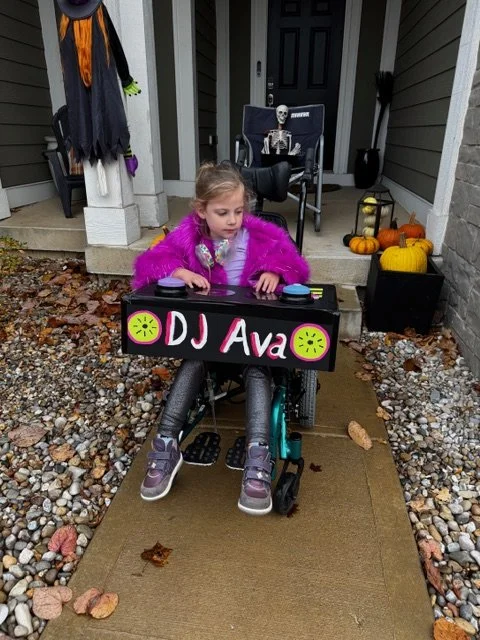
Is your child an AAC-user? Make it part of the costume!
A space explorer could have an AAC device designed as a mission-control computer.
A superhero could have a communication device as part of their superhero gear.
A princess could have a decorated “magic talking tablet.”
A scientist could have a “computer” built into the costume.
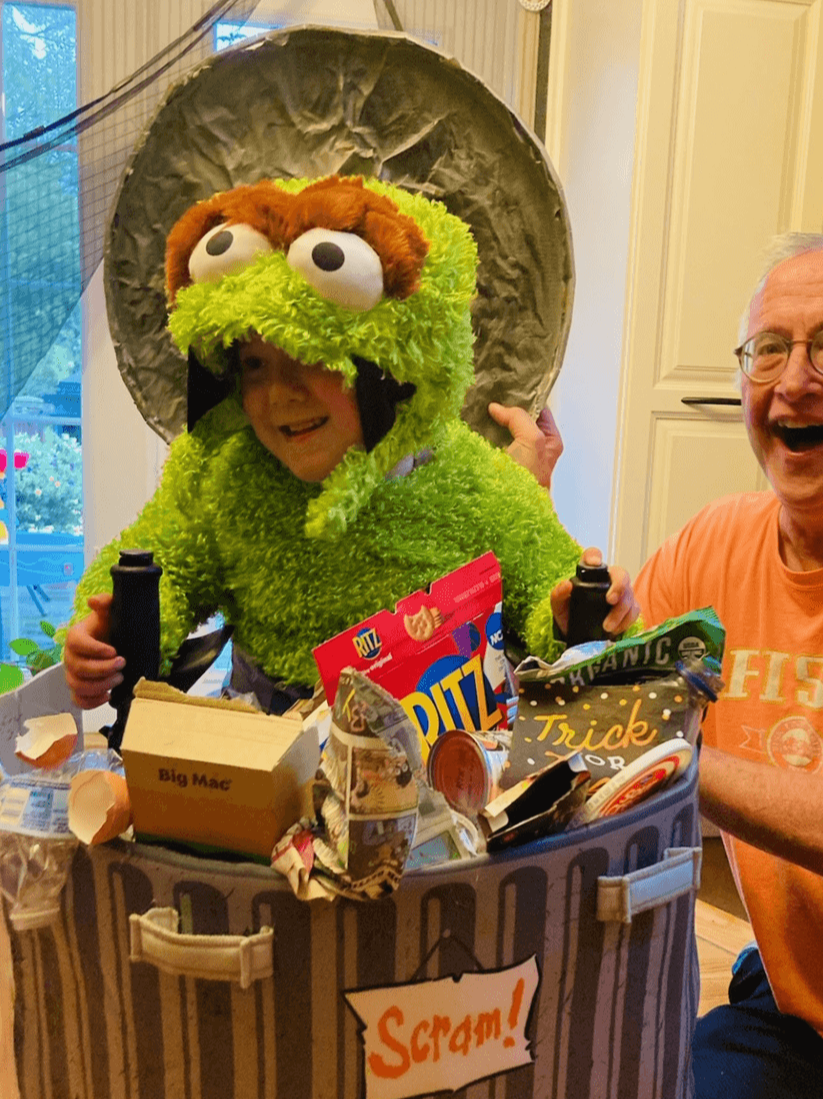
More About May We Help + HALLOWEEN PARTY
May We Help does so much more than just Halloween costumes. Visit their website to see what volunteers have created for people who needed a solution to a problem.
If you’re interested in a Halloween costume build next year, you’ll need to submit an application on their website prior to the holiday. Volunteers, college students, and art students then come together to create a costume. Builds can take anywhere from 20-50 hours. These are truly works of art!
Halloween Event
May We Help also hosts a Halloween event every year (open to the public) with free games, food, and fun for the whole family. Check out the organization’s social media or website for this year’s event details.
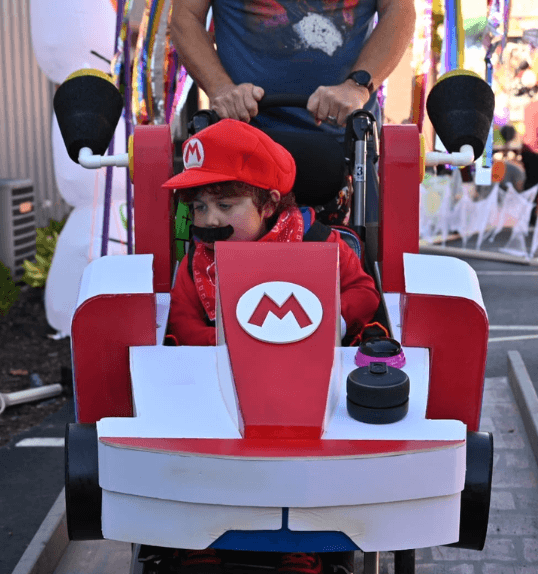
Have you created your own accessible costume? We want to see!
Email us: admin@therareremix.com
RELATED ARTICLES