From Sister to Caregiver: A Conversation with Tami and Donnie
Companion Article for Episode 6 of The Rare Remix Podcast
When a parent has provided a lifetime of care, the question of what comes next is never only legal or logistical. It is deeply personal. It asks a family to imagine new roles, new routines, and a future that may feel impossible to picture.
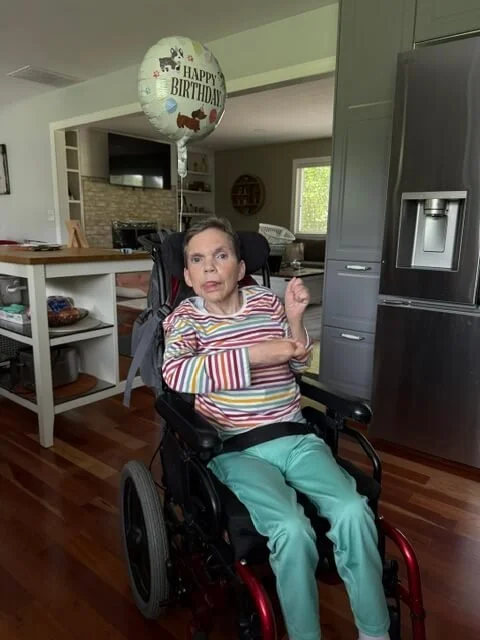
In Episode 6 of The Rare Remix Podcast, we sat down with Tami and Donnie, who recently became guardians and primary caregivers for Tami's youngest sister, Lori. Lori has Rett syndrome and recently celebrated her 58th birthday.
Their conversation gave us a rare look at sibling caregiving across an entire lifetime - from growing up together, to helping aging parents, to planning the transfer of guardianship, to building a new daily life after the passing of a longtime parent caregiver.

A Sister Before a Caregiver
Tami is seven years older than Lori, but she does not remember disability separating them as children. Their birthdays are only three days apart, which meant shared celebrations and multiple Elmo birthday cakes. Tami shared that their parents treated the sisters equally, and family life simply included the support Lori needed.
Lori was born in 1968. Around 18 months, she began losing skills, but Rett syndrome was not a diagnosis her medical professionals could name at the time. Her parents sought answers from physicians and specialists and were given a broad intellectual-disability label. It was not until Lori was well into adulthood that her longtime pediatrician attended a conference, recognized the condition being described, and helped the family reach a Rett syndrome diagnosis.
Having a name mattered because it replaced an outdated label with an explanation, and something the family could learn about. Yet it did not change who Lori was or how Tami related to her. She was still her little sister - sweet, funny, and adored.

When Care Needs Change
For many years, Lori could walk and was more vocally expressive. In 2015, she experienced a major stroke. She survived, but she did not regain the ability to walk and lost much of her earlier expressiveness for a time.
The stroke changed the physical demands of care. Lori began using a wheelchair and Hoyer lift, while her parents, Karen and Dwight - already living with serious health problems of their own - found ways to keep caring for her at home. Because Lori could still bear weight, they developed a standing routine for changing her.
Tami and Donnie also recall a time when Karen lifted her onto the sink to wash Lori’s hair. Donnie describes Karen, as a 'ball of fire.' After the stroke, she was determined to bring Lori home, help her recover, and continue feeding her by mouth. Throughout Lori's life, Karen rejected suggestions that institutional placement was the family's only option. Karen and Dwight kept adapting.
Transition of Care
Tami and Donnie have been part of Lori's care for decades. They stepped in when her parents traveled, accompanied her to appointments, and learned the practical routines. Still, formally transferring guardianship was emotional.
After Dwight passed away and Karen's health declined, Tami was already attending appointments, speaking with physicians, and managing much of the coordination. The first time guardianship came up, however, her mother was not ready. To Karen, giving up guardianship felt like giving up motherhood.
Tami shared that she once said to her mom, “You are still her mom. We are not making decisions without you. I am still your daughter, and Lori is still your daughter."
That reassurance allowed the family to separate authority from identity. Tami could assume the legal responsibility without replacing her mother. Karen remained Lori's mom, and her knowledge and voice still mattered.
Because the transfer happened before Karen died, the family was able to complete the court process and establish Tami and Donnie’s successor guardianship in advance. That did not make the loss easier, but it removed one major legal task from the family.
Transition Take Aways for Other Families
Tami’s advice is simple: have honest conversations early. The person being asked to assume care should understand the daily work, the medical complexity, the financial realities, and the ways caregiving may reshape retirement, travel, work, and home life.
No checklist can remove the emotion from a transition like this. It can, however, keep preventable paperwork from consuming the time and energy a family needs for grieving, caregiving, and adjusting.
Here are some ideas for transition planning:
Identify who will make medical, legal, financial, and day-to-day decisions - and confirm which roles require separate appointments.
Review guardianship or other decision-support arrangements with a qualified attorney before a crisis.
Confirm the successor plan for Social Security representative payee duties, Medicaid renewals, waiver services, banking access, insurance, and other benefits.
Document medications, feeding routines, equipment, providers, transportation, emergency plans, and the small preferences that make daily life familiar.
Create opportunities for the future caregiver to practice the full routine while the current caregiver can still answer questions (if possible).
·Plan for income and respite. A family caregiver may need to reduce work or retire, and paid-caregiver rules vary by state and program.
Planning note: Guardianship, Medicaid waiver, paid-family-caregiver, and benefit rules vary by state and individual circumstances. Families should consult qualified legal and benefits professionals about their own plan.
Building a New Everyday Life
A typical weekday now begins around 5:00 a.m. Tami protects the next hour for coffee, quiet, and thinking through the day before Lori wakes up and her care needs resume. Some days Lori attends a day program, but once she is home there are tube flushes, possible nutritional supplements, dinner, personal care, and bedtime.
Donnie works long days and describes himself as the helper, but his contribution is woven through the routine: lifting, changing, feeding the dog, organizing deliveries, and stepping in wherever needed. Tami brings her nursing background, medical-system knowledge, and take-charge persistence. Donnie brings steadiness, commitment, and patience.
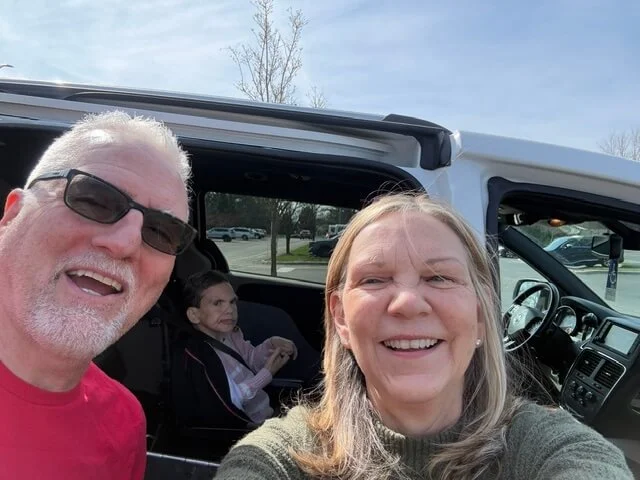
They also learned how much accessibility can restore ordinary freedom. Recently, the couple bought an accessible van, which now means fewer hours waiting for specialized transportation and fewer worries about a missed meal or delayed personal care. Lori can go to restaurants, church, family visits, medical appointments, and wherever else the day leads.
Moving back into their own house was another turning point. Tami had spent years living much of the time at her parents' home while her mother and sister were ill. After maintaining two homes and sleeping away from her own bed for months, selling her mother's house and bringing Lori home gave everyone room to begin again.
Living Life With Lori
Caregiving has changed the spontaneous lifestyle Tami and Donnie once imagined. They cannot always decide at the last minute to attend a concert or leave town. But they are not putting life on hold.
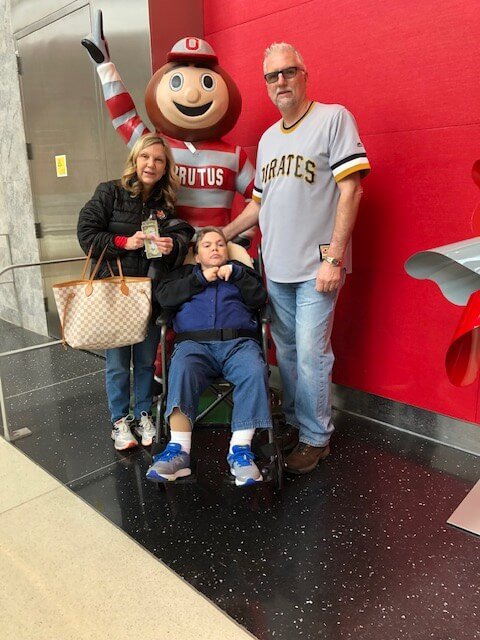
They have visited all but five Major League Baseball parks, and the next plan is San Diego - with Lori. They are preparing to get her on a plane and continue the family tradition her parents modeled: adapt, make a plan, and go.
"We are just going to live life, because that is what my parents would want me to do. They set that example years ago."
When asked about their caregiving superpowers, Tami chose perseverance. She does not spend much time wishing the facts were different; she finds a way forward. Donnie chose patience. He remembered driving Lori to school years ago in his pickup truck, listening to music and noting every song that made her react. He loved the slowness of those trips, and he still carries that calm into their life now.
Their strengths are different, but they fit together. One keeps the system moving. The other slows the moment down. Both are forms of love.
It’s a Remix
Tami became Lori's guardian and primary caregiver, but she never stopped being her sister. Donnie did not inherit an obligation to a stranger; he stepped more fully into a relationship built over 40 years. He calls Lori his little sister and says simply, 'I love my little sister.'
That may be the most important lesson in their story. Good transition planning is not only about preserving benefits, transferring authority, or arranging care. It is about protecting the person's relationships, preferences, routines, joy, and place within the family.
For Lori, that means headphones, Elton John, the Bee Gees, friends, family trips, and a home with two people who know her well. For Tami and Donnie, it means a life different from the one they pictured (it’s a remix!), but still full of purpose, humor, baseball, music, and plans for what comes next.
RELATED ARTICLES