“Everyone Has Their Own Hard”: A Conversation with Allison and Brendan
Companion Article for Episode 5 of The Rare Remix Podcast

In Episode 5 of The Rare Remix Podcast, we sat down with Allison and Brendan to talk about life with their daughters, Anya and Clare. Clare was diagnosed with Rett syndrome in 2020 at a time when COVID was beginning to make major impacts in the world.
During our conversation, we discussed how Clare’s mobility can be a complicated gift, how the family has learned to navigate the complexity of being parents and caregivers, and how they balance sibling relationships.
A Diagnosis While the World Stopped
Before Clare’s diagnosis, her family had been told she had global developmental delays and might eventually catch up. When she began losing skills around age three and a half, Allison and Brendan continued searching for answers.
Then the world shut down.
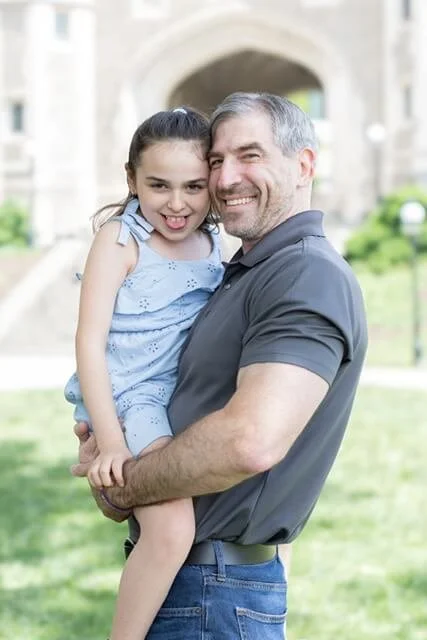
Clare turned four shortly after the COVID-19 shutdown began. In May 2020, Allison and Brendan received a phone call telling them that Clare had Rett syndrome. The supports most would turn to after a diagnosis -- like clinics, therapies, schools, and relatives -- were suddenly unavailable in person.
Allison responded by making a plan. That same day, she joined parent groups on social media, found nearby Rett clinics, and began building a list of next steps. The New Jersey Rett Syndrome Association connected the family with other parents who understood what they were going through.
Community became the bridge between receiving the diagnosis and beginning to understand how to live with it.
Mobile, but Still Complicated
As with other rare disorders, Rett syndrome can look like a spectrum in terms of physical needs and characteristics. Some people with Rett have spoken words while others are completely non-speaking. Some eat by mouth while others have eating supports like G-tubes. Some can walk while others require a wheelchair.
Clare’s parents quickly make clear that she is always in motion. They explain during the episode, “She does more than walk. She runs.”
Clare jumps, climbs, loves the water, and enjoys being outside. Her parents shared that she broke three youth trampolines before her family upgraded to an adult exercise model. Her mobility is a gift, and it also brings to light a variety of safety, access, endurance, and equipment needs that can be difficult for others to understand.
Although Clare is very active, she also tires and uses an adaptive stroller for longer distances and safety. Her family continually reassesses their home as she grows because anything newly within reach can change the safety equation.
This mobility dilemma can also complicate things related to larger systems like insurance. When Clare outgrew her first adaptive stroller, their insurance denied the replacement four times because she could technically walk. Clare’s parents explained that her physical therapist documented that walking did not mean she could safely or consistently cover community distances. The stroller was eventually approved, but only after a lengthy process.
Their experience is a reminder to look beyond a checkbox. “Can a person walk?” is only the beginning. For how long, over what distance, in which environments, and with what level of safety awareness? This realization may be new to someone who is not facing a similar challenge.
Through our conversation, we learned that mobility does not remove support needs. It changes their shape and sometimes makes them less visible.
“Momming” vs. Caregiving
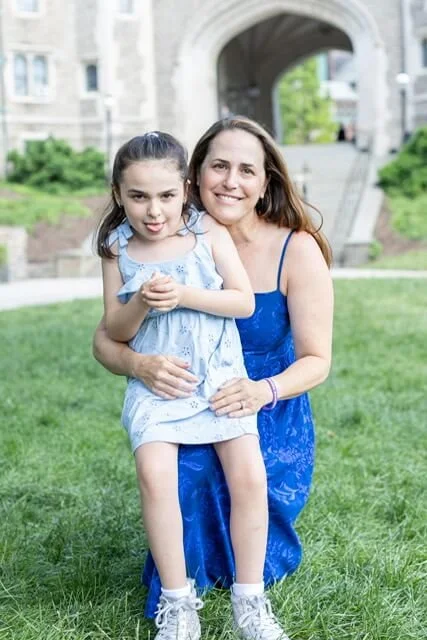
One of the most powerful ideas in the episode came from Allison’s distinction between being Clare’s mom and being her caregiver.
“If I separate caregiving and momming in my brain, it helps me.”
For Allison, “momming” is the relationship: cuddling, laughing, offering comfort, and enjoying Clare. Caregiving includes the hygiene, dressing, hands-on assistance, and safety work that most parents are no longer doing for a ten-year-old.
The distinction is not about creating emotional distance. It keeps the stress of a difficult care task from overshadowing the rest of their relationship. Mentally separating the task from the relationship helps Allison move through what must be done and return to being present as Clare’s mom.
That boundary has become even more meaningful as Clare enters puberty. Her body is changing while her hands-on care needs continue, requiring the family to adapt yet again both practically and emotionally.
Brendan described another tool: consistency. Since both girls were babies, he shared that he has handled bedtime and read to them each night. In an unpredictable life, a familiar routine gives everyone something steady to return to.
Protecting Ordinary Sisterhood
We also discussed Anya and Clare’s sibling relationship, which our guests shared includes affection, frustration, teasing, and ordinary sibling mischief. In one story, Clare took Anya’s seat when she got up for a snack, then laughed when her sister returned. It was a story that could come from any sibling pair, disability or not.
Allison and Brendan protect one-on-one time with Anya and let each daughter have experiences that fit her interests. Sometimes the whole family adapts an activity together. Other times, one parent does something just for Anya.
We learned from Allison and Brendan that meaningful inclusion does not always mean forcing every person into every plan. Sometimes it means making room for both daughters to be fully themselves.
Community Connection
Allison shared that she still turns to other families for practical questions that rarely make it into a medical handout: adaptive car seats, clothing, hygiene products, travel, accessibility, and puberty.
Lived experience is invaluable—but it also has boundaries. She shared that parent recommendations can help identify useful products & strategies, or answer specific questions. Importantly, medical decisions still go back to Clare’s care team.
The conversations within social media groups have grown alongside the children. A group that once compared formula and diapers now talks about puberty and the mature years ahead. Now a seasoned Rett mom, Allison offers connection to newly diagnosed families through the International Rett Syndrome Foundation. Their family’s fundraiser, Clare sMILES for a Cure, also brings families together to raise awareness and funds.
A Different Hard
Allison and Brendan do not pretend the work is easy. They also do not let the work become the whole story.
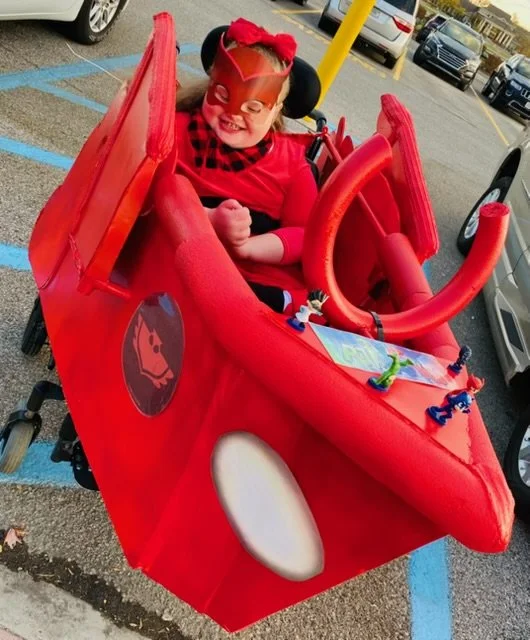
Their family laughs about knowing every line of Mickey Mouse Roadster Racers, a product of hearing the same TV shows over and over. When life gets difficult, Brendan gets Clare outside for walks and introduces the family to neighbors. They adjust, try again, and keep moving.
Every family has its own version of hard. While comparing whose hard is harder rarely helps, sharing what we have learned just might.
RESOURCES & LINKS
International Rett Syndrome Foundation:rettsyndrome.org
New Jersey Rett Syndrome Association: njrsa.org
Rett University:rettuniversity.org
Clare sMILES for a Cure / New Jersey Strollathon: Event page
Podcast Episode Link: Episode 5
RELATED ARTICLES